Kavaná means intention. Our purpose is simple: bring more prayer, Torah learning, and focus into everyday life. These are the people and ideas that inspire our approach.
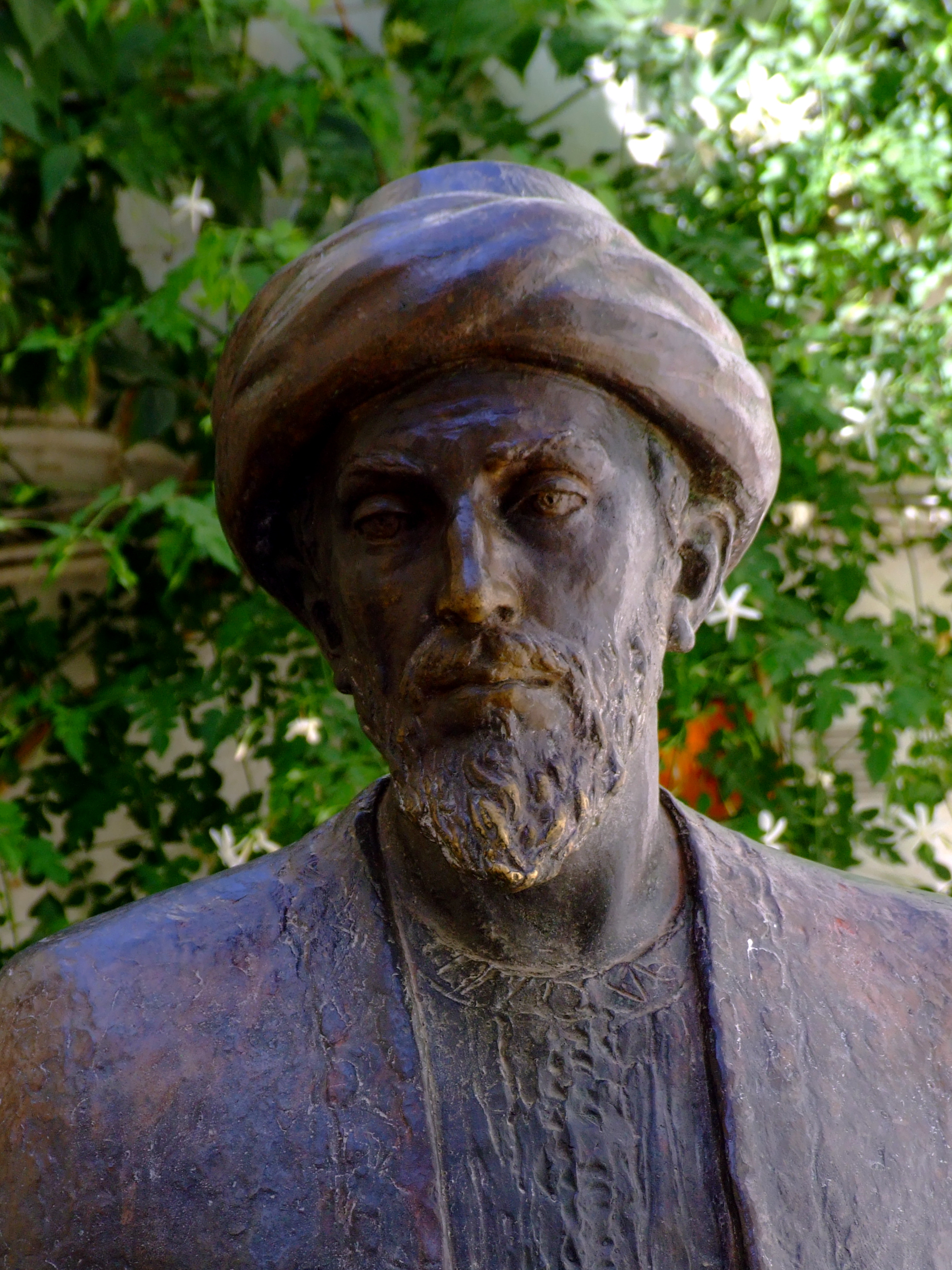
Sculpted portrait of Rambam
SCIENCE, ASTRONOMY, AND THE JEWISH DAY
Rambam
Rabbi Moshe ben Maimon · Maimonides
Rambam teaches that contemplating the natural world can deepen our love and awe of G‑d. His writings explore nature, the heavens, and the mathematics of the Jewish calendar. In his laws of the new moon, he values astronomy and geometry grounded in sound reasoning.
That is why Kavaná's daily times and Jewish calendar are dedicated to Rambam. The movement of the sun helps determine prayer times; the moon is central to the Jewish months. For us, his approach is an invitation to study physics, science, and astronomy—and bring that understanding into everyday Jewish life.
His teachings also inspire us to participate in ordinary life and care for the body: live in the world with knowledge and intention.
Kavaná's use of technology is dedicated to the Lubavitcher Rebbe. Technology can be used for good or harm; he inspires us to use it to spread Torah, mitzvot, and goodness.
That is the purpose behind Kavaná: turn the phone in your hand into a tool for prayer, Jewish learning, and focus. Use technology with intention, and bring Judaism into everyday life with warmth and a positive attitude.
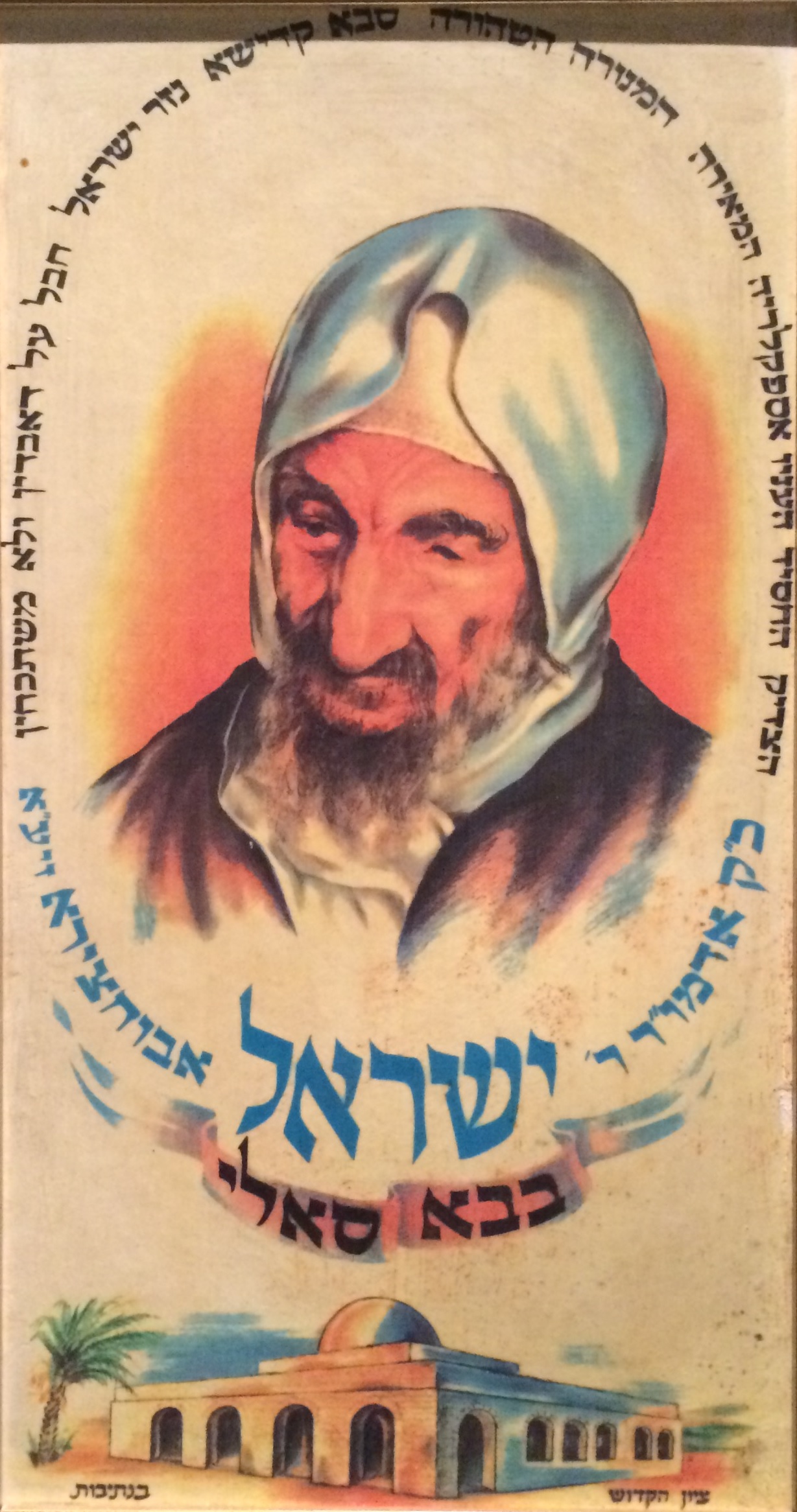
Baba Sali's devotion to prayer, Torah, and helping others is an inspiration rooted in Jewish tradition.
Screen blocking in Prayer Mode is dedicated to Baba Sali. For Kavaná, his devotion inspires care with what we take in: guard your eyes and ears, choose what you watch and listen to, and protect time for prayer. Prayer Mode helps you put chosen distractions aside.
Rabbi Nachman teaches hitbodedut: setting aside time to speak to G‑d personally, in your own words and familiar language. Prayer can hold the ordinary details of your life—gratitude, worries, hopes, and what is on your heart.
Our siddur is dedicated to Rabbi Nachman, with his emphasis on a living relationship with G‑d. The written prayers give you words to begin with; hitbodedut invites your own voice alongside them. His teaching on joy encourages us to keep returning with hope.
Kavaná calculates daily times from the date and the latitude and longitude of your location or chosen city. The calculations run on your iPhone, using published solar equations and defined halachic conventions.
Based on astronomy
Sunrise and sunset use NOAA's solar equations, based on Jean Meeus's Astronomical Algorithms. A second calculation refines the initial estimate. The horizon angle includes the standard allowance for the sun's apparent radius and atmospheric refraction.
Defined prayer times
The GRA day is divided into twelve proportional hours from sunrise to sunset. The app also shows an MGA Shema time using a day extended by 72 fixed minutes at each end. Dawn is 72 minutes before sunrise; default nightfall uses the sun 8.5° below the horizon.
Your Shabbat settings
Candle lighting defaults to 18 minutes before sunset, with other offsets available in Settings. Havdalah uses your selected number of minutes after sunset or the 8.5° nightfall calculation. Hebrew dates use iOS's Hebrew calendar, with the current Jewish date advancing after calculated sunset.
What accuracy means
NOAA describes its method's theoretical sunrise and sunset accuracy as about one minute within 72° north or south. That is a benchmark for the method, not a guarantee for every Kavaná time. Weather, refraction, elevation, and an obstructed horizon can change what you observe; the app does not model local terrain or elevation.
FROM THE SUN TO THE CLOCK
The equations, explained.
The date gives us the sun’s declination (δ), its angle north or south of the celestial equator, and the equation of time (E), the difference between apparent solar time and mean solar time. These vary through the year; the app computes them from Julian centuries using the Meeus solar terms.
The solar terms used inside the calculation
T = (JD − 2451545) / 36525
δ = asin(sin ε · sin L)
y = tan²(ε / 2)
E = 4 · (180 / π) · [y sin(2L₀) − 2e sin M
+ 4ey sin M cos(2L₀) − ½y² sin(4L₀) − 1¼e² sin(2M)]
JD is the Julian date, and T measures centuries from the J2000 epoch. ε is Earth’s corrected axial tilt, L is the sun’s apparent longitude, L₀ its geometric mean longitude, M its mean anomaly, and e the eccentricity of Earth’s orbit. Angular inputs to sine and cosine are converted to radians. E is returned in minutes. The time-dependent orbital terms follow the Meeus/NOAA method.
cos H = (cos Z − sin φ · sin δ) / (cos φ · cos δ)
H is the sun’s hour angle, φ is your latitude, and Z is the zenith angle. For sunrise and sunset, Z = 90.833°. For 8.5° nightfall, Z = 98.5°. An hour angle of 1° corresponds to four minutes of time.
Solar noon = 720 − 4λ − E
Sunrise = solar noon − 4H
Sunset = solar noon + 4H
These values are minutes after midnight UTC. Longitude λ is positive east and negative west. The solar terms are evaluated once near local noon and again at the estimated event time to refine the result. The selected time zone converts UTC to the clock time you see.
A proportional hour changes with the season. For MGA’s 72-minute convention, replace sunrise with sunrise − 72 minutes and sunset with sunset + 72 minutes before dividing the extended day into twelve.
Choose an accurate location and keep your iPhone's date and time zone correct. Times are currently displayed using the phone's time zone; a city chosen in another time zone may therefore show a different clock time from that city's local calendar. No daily times are shown until you set a location.
Near the poles, the sun may not rise, set, or reach a requested twilight angle. Sunrise and sunset calculations can be unavailable; some twilight calculations use fixed-minute fallbacks. For these conditions, travel, or a practical halachic deadline, confirm the appropriate times with a trusted local calendar or your rabbi.
We’re currently training an open-weight model for halachic questions within Orthodox Judaism. We’re starting with straightforward questions rooted in widely accepted halachic principles.
Our aim is to explain the reasoning behind an answer and point to its sources, so you can understand and continue learning. Where customs differ or a question depends on personal circumstances, the guidance should make that clear and direct you to your rabbi.
This model is still in development. Rav is a learning companion; personal halachic decisions belong with a qualified rabbi.
A practice for everyday life.
Live in the world with intention. See the spark in others. Guard your eyes and ears. Speak personally to G‑d. Care for your body. Kavaná brings those intentions back to a simple daily practice: prayer you can understand, the Jewish day's times, and a little room to focus.
Rabbi Nachman: traditional illustration, artist unknown, Wikimedia Commons, public domain. Historical illustrations and sculptures are representations, not photographs from their subjects' lifetimes.